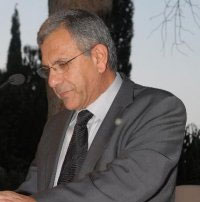
Constantinos Christou is professor of mathematics education at the University of Cyprus. He served as President of the Governing Body of the Open University of Cyprus, President of the Cyprus Council for the Recognition of Higher Education Qualifications (Ky.S.A.T.S), vice president of the Accreditation Council of Cyprus (S.Ek.A.P), and president of the Cyprus Scientific Council. He is a member of the board of “European Society for Research in Mathematics Education”. He was appointed as the president of the committee for the development of new mathematics curricula and new school textbooks in Cyprus.
He has published more than 100 books, book chapters, journal articles and conference proceedings. He participated as coordinator and partner in European research projects and was the coordinator of five other research projects funded by the University of Cyprus, the Cyprus Research Foundation and Leventis Foundation.
Selected Publications (2010-2018)
Pittalis, M., Pitta-Pantazi, D., & Christou, C. (2018). A longitudinal study revisiting the notion of early number sense: algrebraic arithmetic a catalyst for number sense development.Mathematical Thinking and Learning, 20(3), 222-247.
https://doi.org/10.1080/10986065.2018.1474533
Chimoni, M., Pitta-Pantazi, D., & Christou, C. (2018). Examining early algebraic thinking: insights from empirical data. Educational Studies in Mathematics, 98(1), 57-76.
Papageorgiou, E., Christou, C., Spanoudis, G., Demetriou, A. (2016). Augmenting intelligence: Developmental limits to learning-based cognitive change. Intelligence, 56, 16-27.
Zachariades, T., Christou, C., & Pitta-Pantazi, D. (2013). Reflective, systemic and analytic thinking in real numbers. Educational Studies in Mathematics, 82(1), 5 – 22, doi:10.1007/s10649-012-9413-y
Chrysostomou, M., Pitta-Pantazi, D., Tsingi, C., Cleanthous, E. Christou, C. (2013). Examining number sense and algebraic reasoning through cognitive styles. Educational Studies in Mathematics, 83(2), 205 – 223, doi:10.1007/s10649-012-9448-0
Kontoyianni, K., Kattou, M., Pitta-Pantazi, D., & Christou, C. (2013). Integrating mathematical abilities and creativity in the assessment of mathematical giftedness. Psychological Assessment and Test Modeling, 55(3), 289-315.
Pitta-Pantazi, D., & Christou, C. (2011). The structure of prospective kindergarten teachers’ proportional reasoning. Journal of Mathematics Teacher Education, 14(2), 149 – 169. doi:10.1007/s10857-011-9175-y
Pitta-Pantazi, D., Christou, C., Kontoyianni, K., & Kattou, M. (2011). A model of mathematical giftedness: Integrating natural, creative and mathematical abilities. Canadian Journal of Science, Mathematics and Technology Education, 11(1), 39 – 54. doi:10.1080/14926156.2011.548900
Pitta-Pantazi, D., & Christou, C. (2010). Spatial versus object visualisation: The case of mathematical understanding in three-dimensional arrays of cubes and nets. International Journal of Educational Research, 49(2-3), 102 – 114. doi:10.1016/j.ijer.2010.10.001
Pittalis, M., & Christou, C. (2010). Types of reasoning in 3D geometry thinking and their relation with spatial abilities. Educational Studies in Mathematics, 75(2), 191-212. doi: 10.1007/s10649-010-9251-8



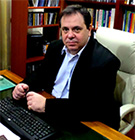 Evaggelos Drimpetas is an economist and a faculty member (Professor) at the Department of Economics in the Democritus University of Thrace. In the past, he served as head of the Economic Department and today he holds the position of dean of the School of Social, Political and Economic Sciences.
 Professor George K. Christophides is Chair of Infectious Diseases and Immunity and Director of the Vector Immuno-Genomics and Infection Laboratory (VigiLab) at Imperial College London. He received his PhD from the University of Athens in 2000 and moved to the European Molecular Biology Laboratory (EMBL) as a Marie Curie Fellow and later as a staff scientist. He joined Imperial College as a Senior Lecturer in 2005 where he became Professor and Chair in 2011. Since 2013, he is also Adjunct Professor at the Cyprus Institute.